 KanKey


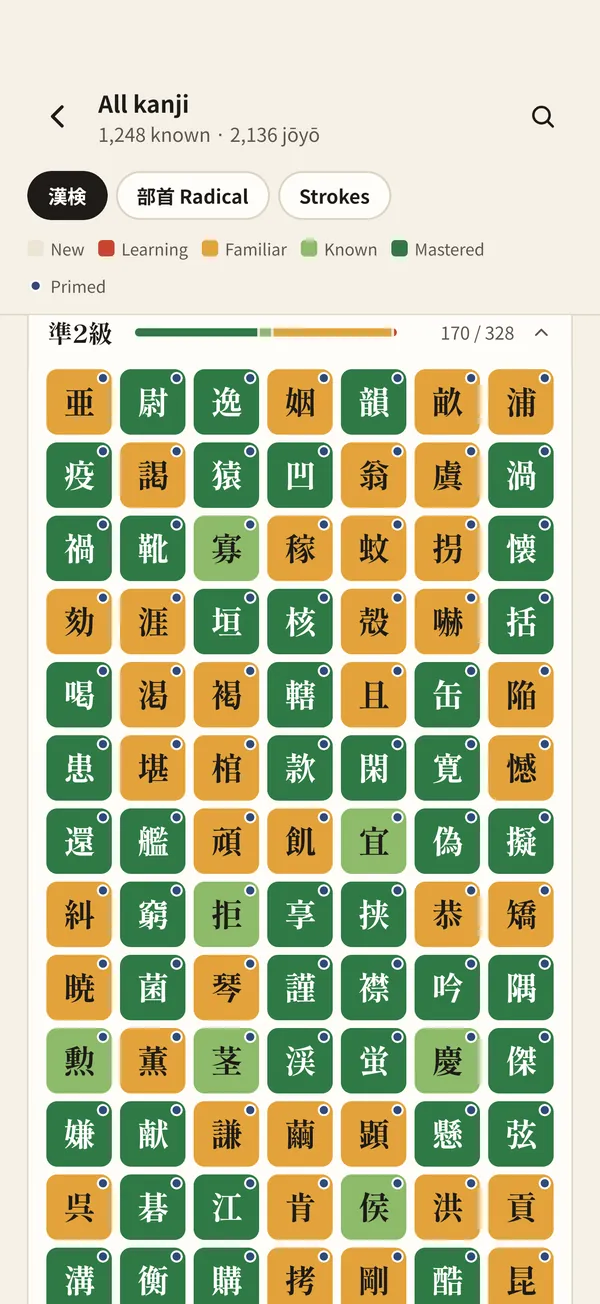
6,077 kanji
Meanings and mnemonics
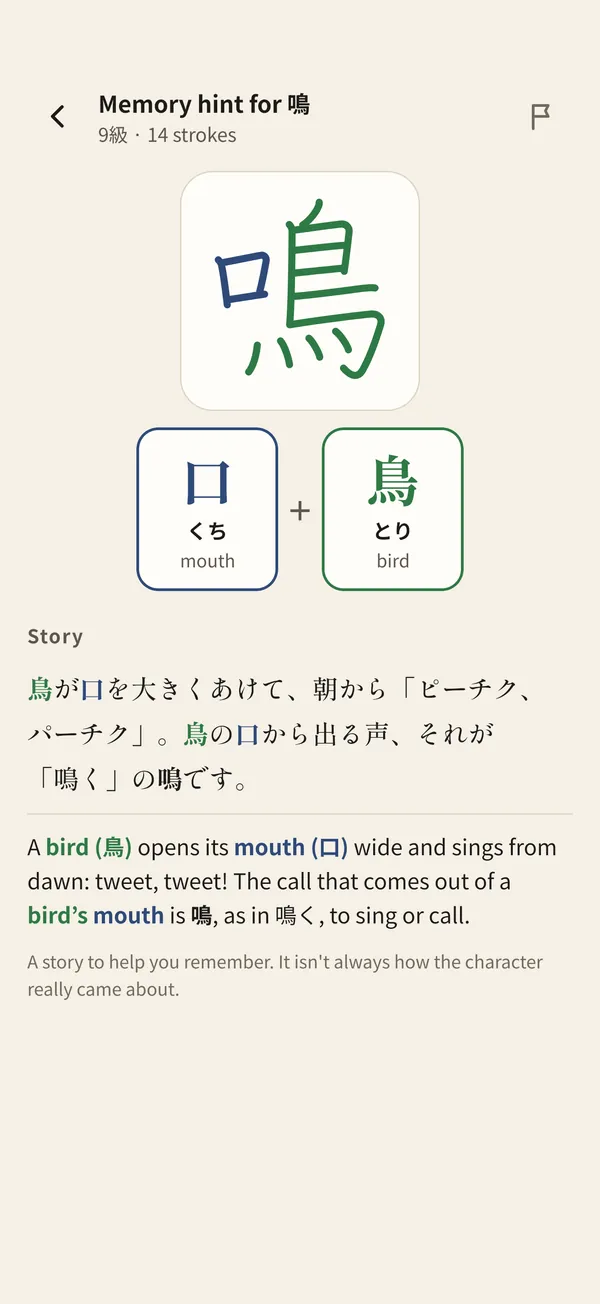
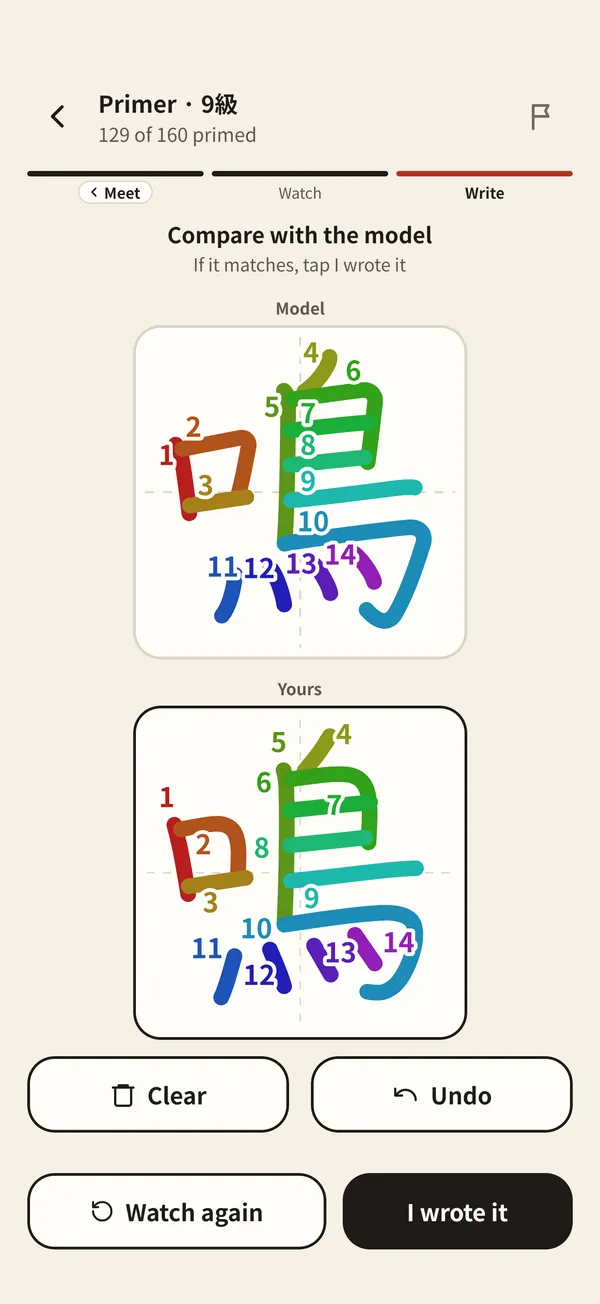
Every kanji has a meaning in plain English and a mnemonic that builds it from its parts. 鳴, to cry or sing, is a 鳥 bird opening its 口 mouth wide.
Your key to Kanji
Write kanji from memory, inside real Japanese sentences, then check every stroke. Over 6,000 kanji, from the first 80 that children in Japan learn to the rarest ones, each with a meaning and a mnemonic.
No ads · No account needed · Works offline
How it works
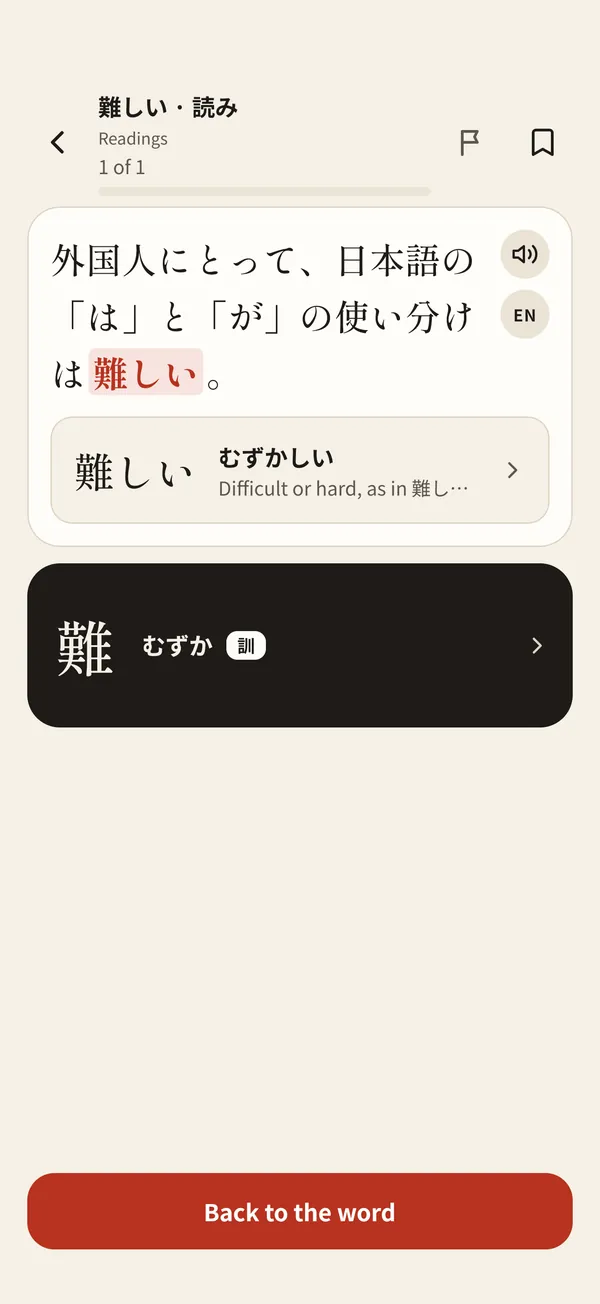
Each new word comes up in a real Japanese sentence. Think of the reading, or type it in kana or romaji, then check. The English translation is a tap away.
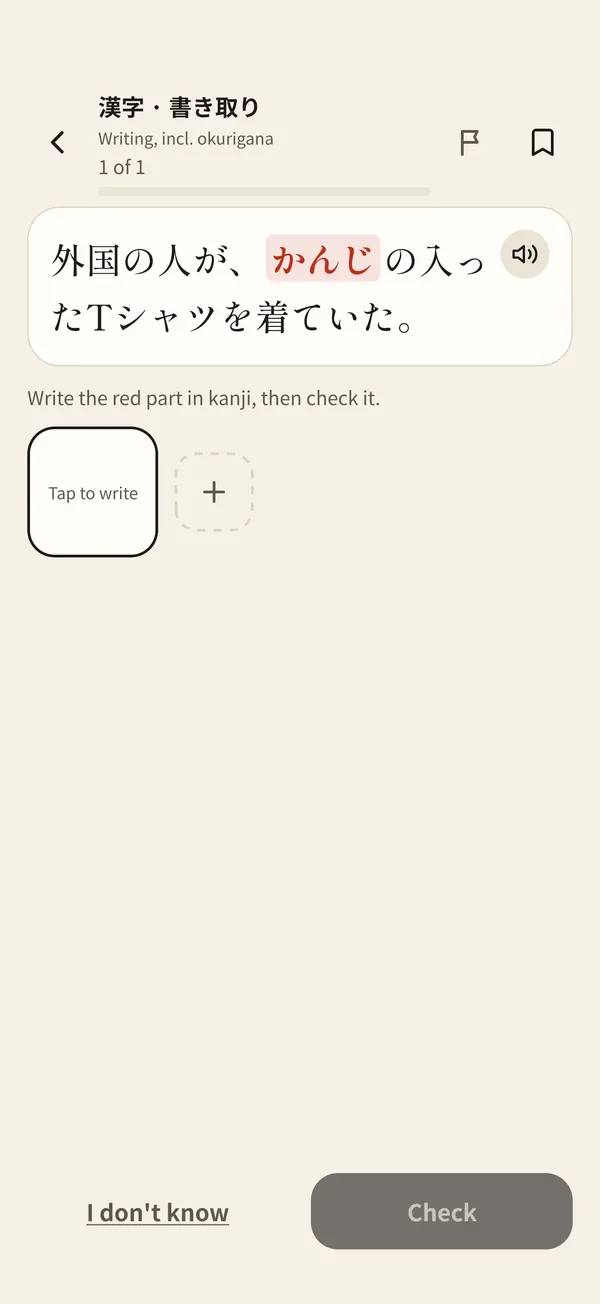
Once you can read a word, it comes back as writing. The sentence shows the word in kana, and you write the kanji by hand in an empty box. There are no choices to pick from and nothing to trace. Your finger works, but a smartphone pen feels closer to writing on paper.
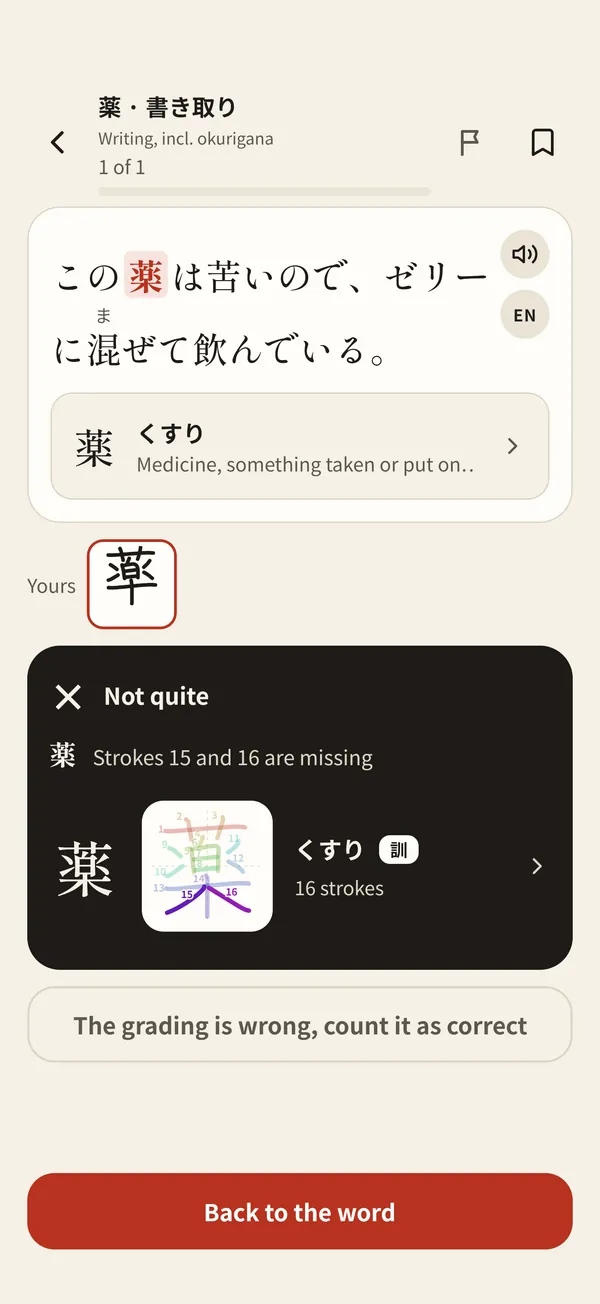
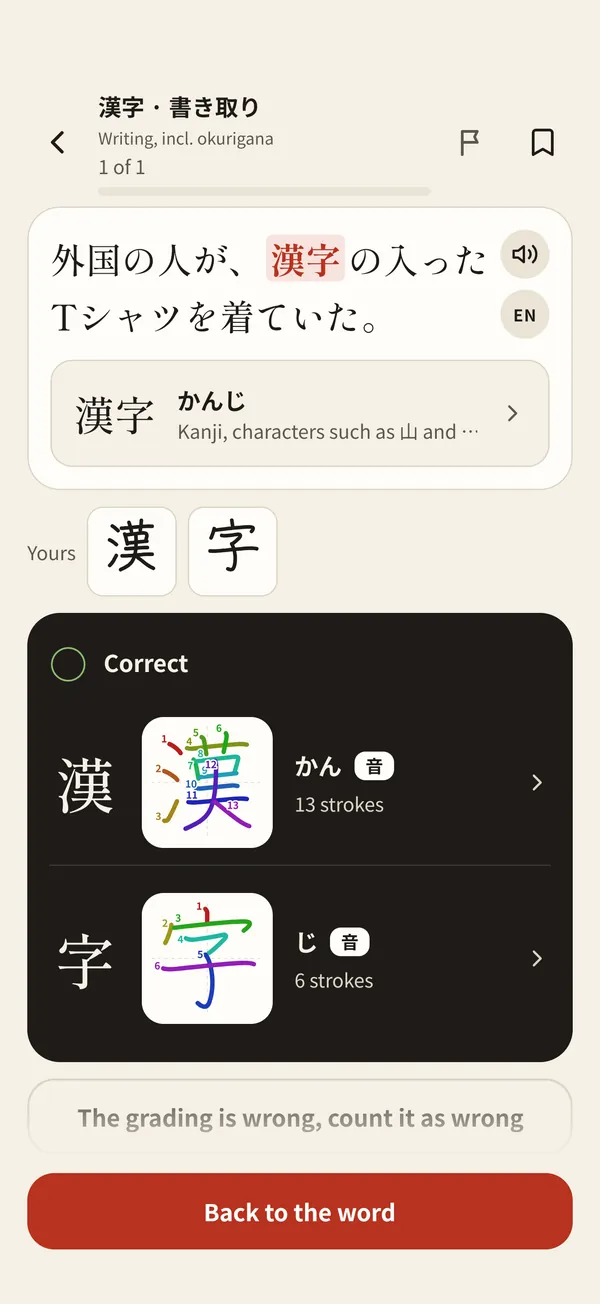
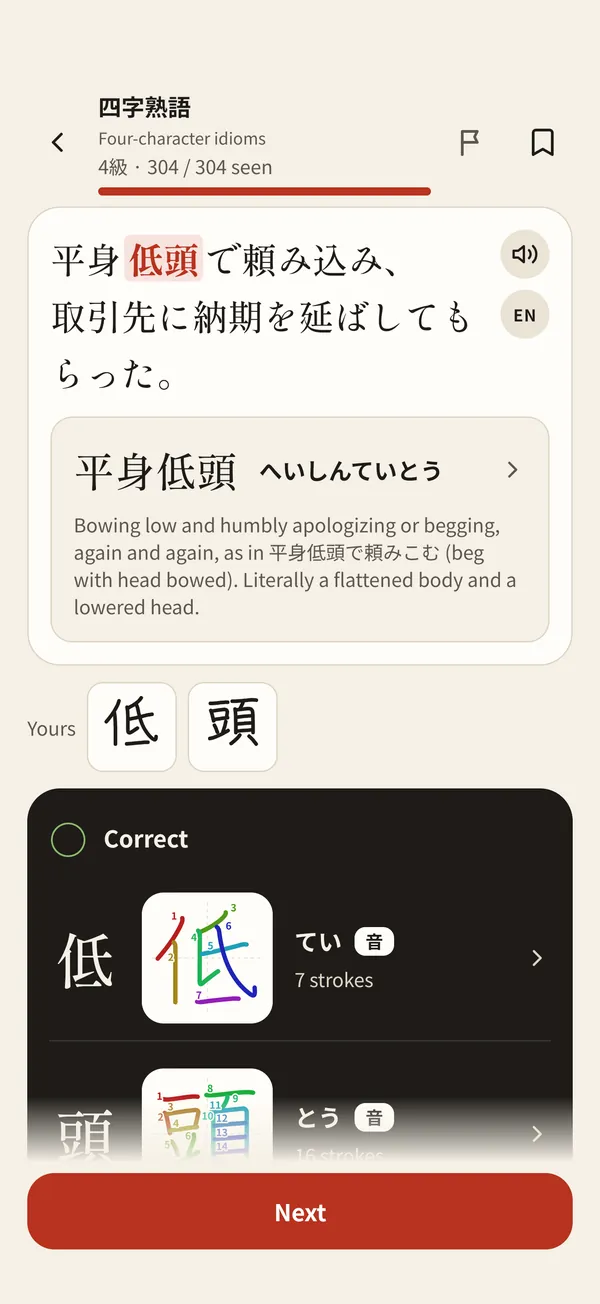
You write the way you would on paper, and the app grades each kanji you wrote. When something is off, it tells you what:
Those strokes turn red, in your writing and in the stroke order. Grading runs on your phone, even offline, and you choose how strict it is. You can also mark your answers yourself.
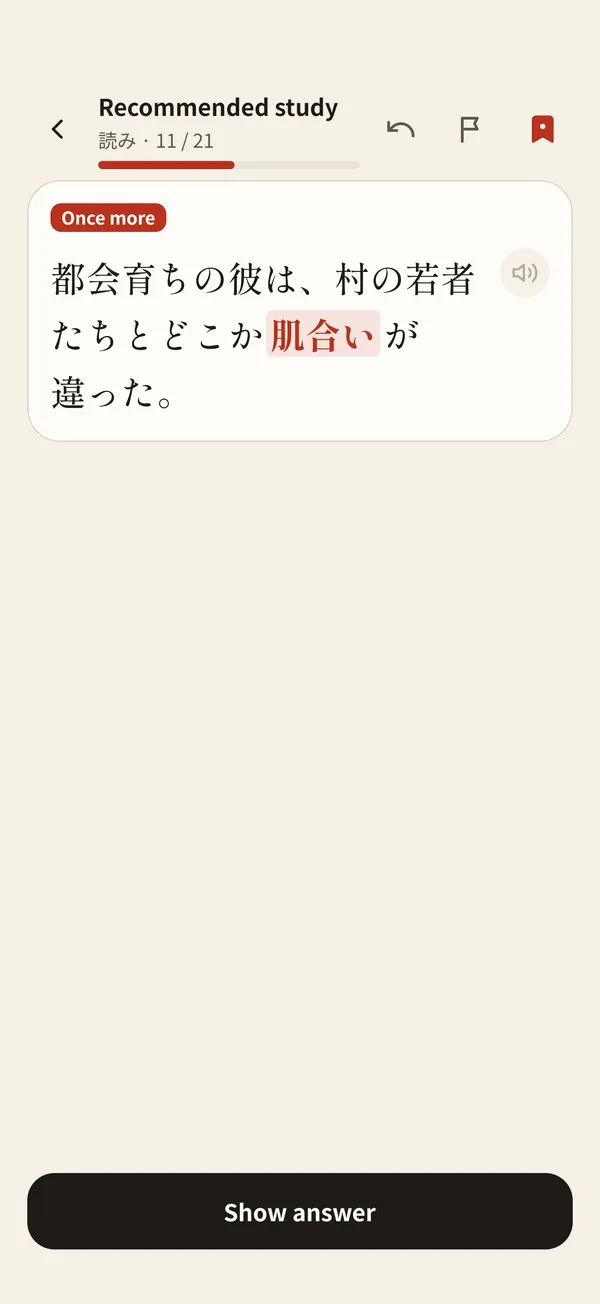
A word you get wrong is asked once more, a few questions later in the same session.
Inside the app
6,077 kanji
Every kanji has a meaning in plain English and a mnemonic that builds it from its parts. 鳴, to cry or sing, is a 鳥 bird opening its 口 mouth wide.
Over 26,000 words
Words have English definitions and audio, and every example sentence has an English translation.
Remembering
Primer
The Primer shows a new kanji's meaning and mnemonic and plays how it's written. Then you write it from memory and compare.
Reviews
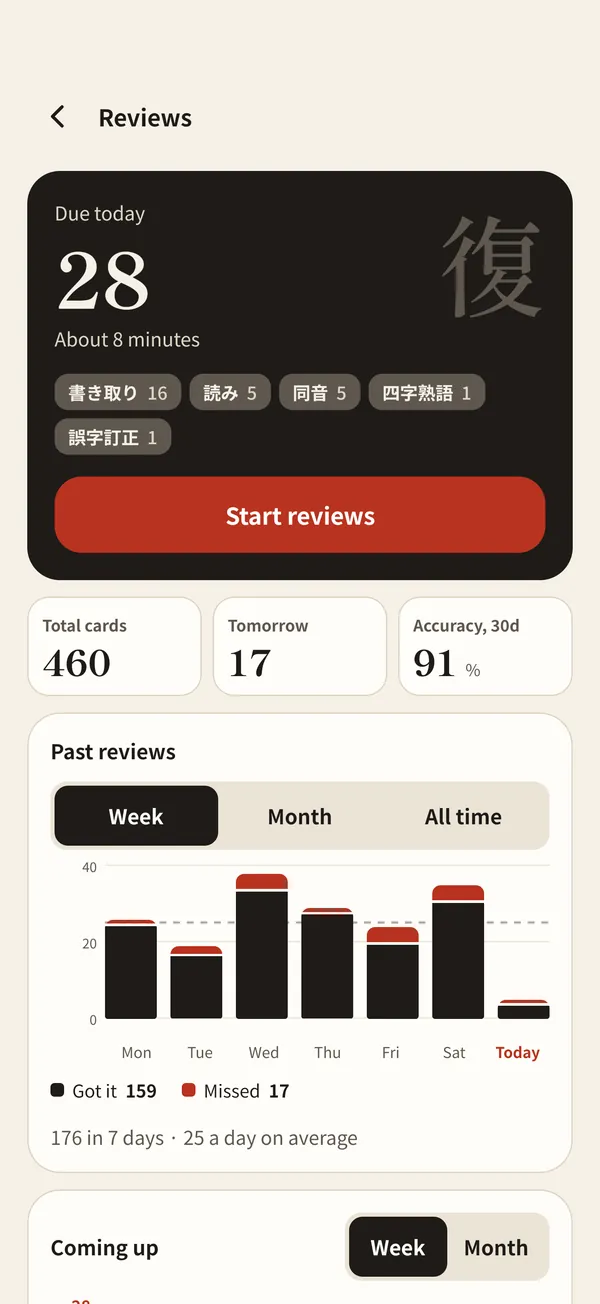
Words you've studied come back when you're about to forget them. FSRS-7, a spaced-repetition algorithm, plans each review from your own answers.
Weak-spot training
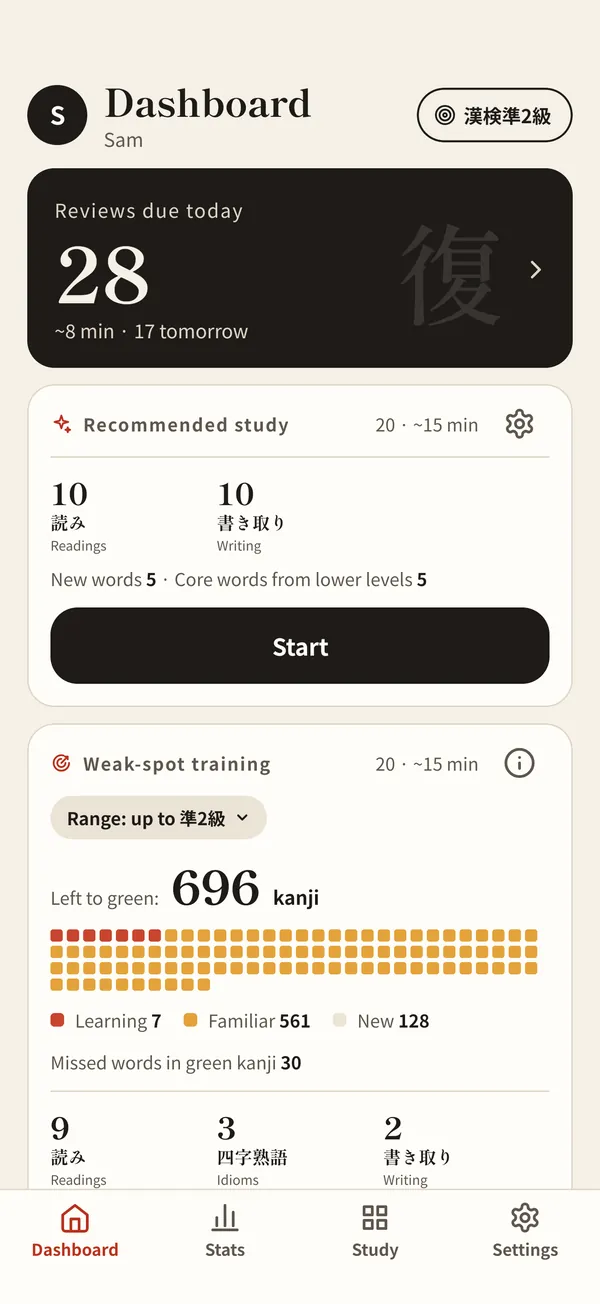
Weak-spot training picks the kanji you miss most and quizzes you on them until you know them.
Known kanji
A kanji only counts as known after you've read it and written it correctly, on more than one day.
Over 6,000 kanji
An optional subscription: Reviews with FSRS-7, up to 6 profiles, sync across devices, and a dark theme made for OLED screens. Everything else in KanKey is free.